Mauritius: The Island that's no Dodo
Mauritius’s most famous inhabitant also has the unfortunate distinction of being the world’s greatest byword for failure. The last dodo died in 1681, fewer than 80 years after the island became home to the colonial Dutch. It’s downfall? Being too sluggish and unable to fly. At least the Mauritian economy suffers no such problem. Now firmly on the OECD ‘white list’, the jurisdiction acts as the conduit for a huge chunk of foreign direct investment into India, one of the world’s fastest-growing economies. And as it sits near both Africa and Asia too, many believe it’s set to soar as the planet’s economic focus shifts from west to east.
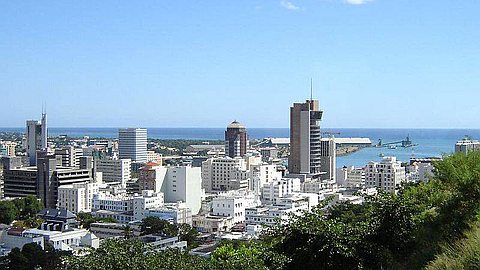
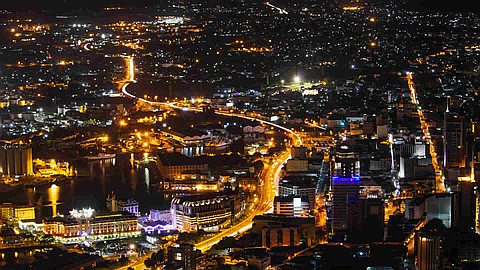
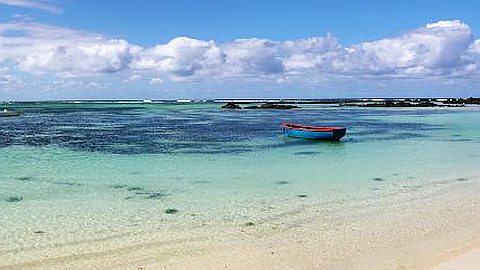
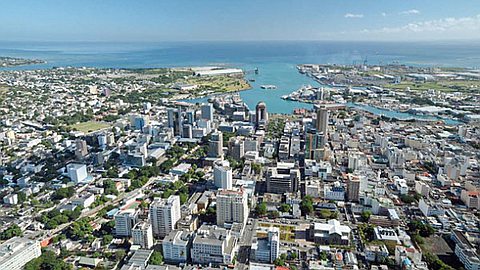
Mauritius is an island in the Indian Ocean, around 500 miles east of Madagascar with a population of more than 1.25 million. It is hot, pleasant, culturally diverse, and renowned for its welcome. As late as the 1990s this was of little benefit to anyone other than fawning newly-weds. But when tourist revenue began to slacken, the island’s government kicked off a drive to establish it as a financial centre. It set about developing its own version of Canary Wharf in Port Louis and the nearby Cyber City, and Mauritius became a platform to structure both inbound and outbound investments between Africa and Asia.
Its story is similar, then, to another offshore archipelago with ties to the UK and France. “Mauritius did the same as the Channel Islands,” says Hiren Patel, Partner at VerrasLaw in Jersey. “When tourism dropped off, it pushed itself as a financial centre. The government put the regulation in place, matching the likes of Jersey and the Cayman Islands, and everyone stepped their game up. The big banks came over, and that influx of expertise helped make sure the benchmark went up even further.” Now anyone landing at the brilliantly named Sir Seewoosagur Ramgoolam International Airport will find a jurisdiction full of well educated, bilingual professionals in law, accountancy, tax and finance, and a pro-investment climate where business costs are low and corporate law flexible. It also has a time zone that allows same-day transactions from the United States through Europe and the Middle East. These days any financial services business looking to build a global presence will have a footprint in Mauritius, whether that’s HSBC and Deutsche Bank or Ernst & Young and Grant Thornton.
From island to island
Mauritius’s masterstroke has been to sign a sprawling network of tax treaties with some 36 countries, including China, the African nations, Europe and – crucially – India. The island’s structures are now responsible for 42 per cent of foreign direct investment into what is one of the world’s fastest-growing economies, accounting for £55bn between 2000 and 2011. Mauritius has become hugely attractive to international investors looking for tax efficiencies, saving on, say, capital gains tax on the disposal of assets. “Anyone wanting to do business with India will go via Mauritius,” says Patel. “The island will continue to do well as long as people want to invest into India or vice versa.”
It will come as absolutely no surprise, then, to find Channel Island companies among those making their way to the island. Law firm Bedell moved there early in 2011, offering a full law and fiduciary-services business. According to Mark Dunlop, who heads its Mauritian office, Bedell’s work there is similar to that in the Channel Islands, only replacing Jersey and Guernsey’s focus on Europe and the US with India and Asian companies moving into Africa.
“Channel Islands companies are setting up in Mauritius as it offers business-friendly platforms in a low-cost environment,” says Mike Bird, Chief Country Officer at Deutsche Bank (Mauritius). “New businesses can easily settle in and be operational in just three days. Doing business there is easy, as Mauritius complies with best practice in terms of transparency, good governance and ethics.”
The key difference, however, is the maturity of the market. “The banking industry has developed a lot in the past 10 years, but the legal side hasn’t moved at the same pace,” says Dunlop. “They don’t have the international connections or the support staff. That was good for us – the idea was to set up and establish a market. The regulator has been encouraging, and the likes of HSBC were saying that if we moved over they’d have work for us. So the move has been somewhat client-driven too.”
Small fish, big pond
But you may not want to pack your sun block and BlackBerry just yet. Mauritius still has a long way to go. Its transport and infrastructure remain behind that of more established rivals, and it’s facing some stiff competition. In April 2011, Singapore trumped Mauritius as the single biggest source of foreign direct investment into India for the first time. Singapore boasts an enviable double tax treaty with India, as well as equally strong cultural links (a third of the population are Indian). It also has its sights set on challenging the likes of Switzerland for financial might, leaving Mauritius looking a comparative minnow.
“It’s difficult to see how it could credibly compete with places like Singapore in the current environment,” says Sean Cheong, Director of Collas Crill’s Singapore office. “Mauritius isn’t on the same level as the Channel Islands or Singapore. Yes, it has developed incredibly quickly and has a lot going for it, but if you’re looking to package funds in a way that will attract European investors, you wouldn’t use a Mauritian structure. It’s still a long way behind.” Indeed, if Mauritius wishes to keep gaining ground on the rest of the offshore pack, it may have other hurdles to leap. The Indian tax authorities have been keen to clamp down on canny overseas operators, and has spent the past five years trying to claw back tax from Vodafone for its offshore purchase of the Indian assets of Hutchison Whampoa in 2007 [see left]. The Indian courts ruled in Vodafone’s favour in January this year, but India is still in the process of creating its Direct Tax Code. With the government desperate to shore up its ailing coffers, offshore tax treaties may not stay so sweet for long.
But though Mauritius’s privileged tax position is now under scrutiny, Mark Dunlop reckons it’s simply too important to dispose of entirely. “India wants to limit its tax leakage, but it needs to maintain favourable conditions to attract inward investment. Yes, the treaty will need to be adjusted, but this could just involve tinkering, not a fundamental renegotiation.”
So where does all this leave the Channel Islands? Is there cause to fear Mauritius as another challenger in the world of offshore finance? Not necessarily. Yes everyone’s a competitor to a point, with some overlap of product. But the fact is each has worked hard to carve a different niche. While Mauritius may be mopping up business around the Indian Ocean – South East Asia, India and Africa – the Channel Islands can continue doing the same in the Atlantic, serving the UK, EU and US.
Instead of looking too hard at what Mauritius is up to, the Channel Islands can be confident that they too offer things that other rivals don’t. Its trusts and wealth management experience are second to none. “Do we in the Channel Islands feel threatened?” asks Cheong. “Not at all. The Channel Islands will continue to be favoured by most established investors and institutions. The solutions we offer in the Channel Islands aren’t easily replicated in Mauritius.”
Unlike the dodo and the settlers, the arrival of one needn’t cause the demise of the other.